
- Secure
fixation - Less noticeable
scars - Tailored to Asian
facial anatomy
Deep Plane
- Secure fixation
- Less noticeable scars
- Tailored to Asian facial anatomy
The Surgeon Who Loves Facelifts
We usually schedule
one facelift per day.
As a rule, we schedule one facelift per day, except when circumstances require otherwise.
We incorporate the Deep Plane technique, which moves the SMAS and fat layers rather than just the skin.

Facelift surgery at THE PLAN for age-related facial changes
As a rule, up to one facelift per day, except when circumstances require otherwise.
The clinic occupies four floors exclusively to help protect patient privacy.
The clinic offers a care program that may include hyperbaric oxygen therapy during the first four weeks after surgery.
The operating room's CCTV is operational 24 hours a day
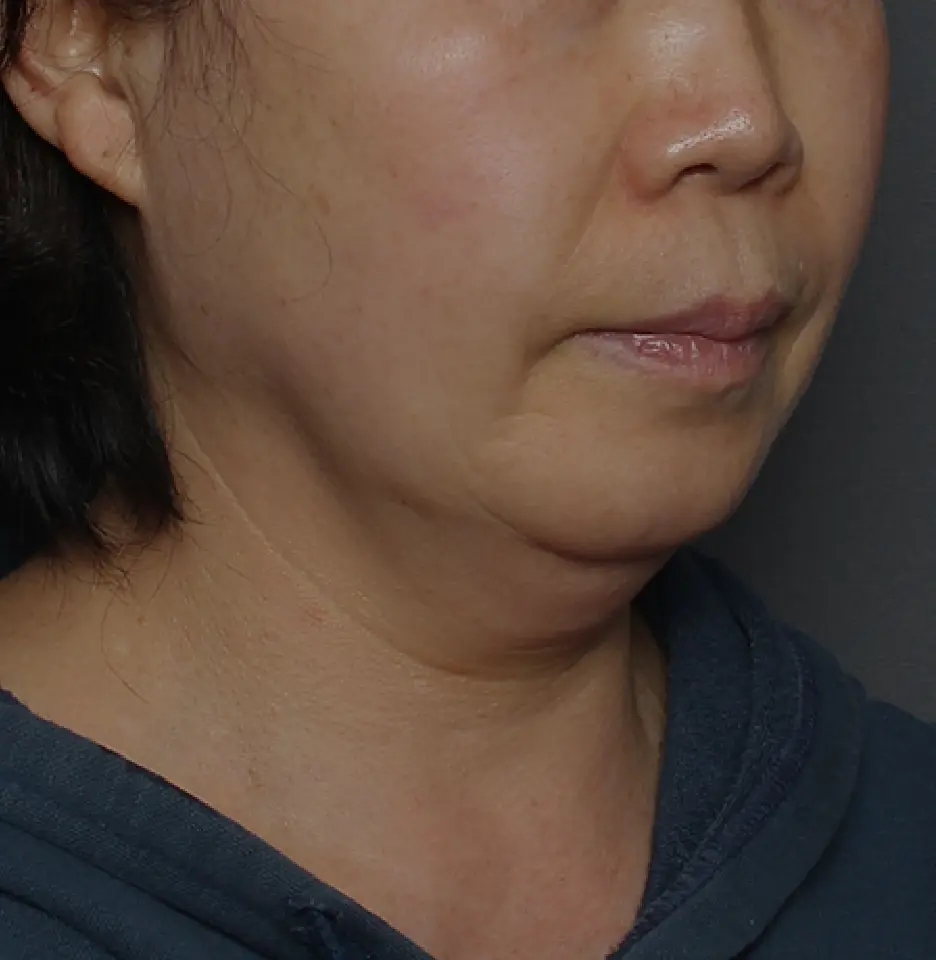
Facelift case studies
This is a progress photo taken under the patient's consent, at the same location and under the same conditions.
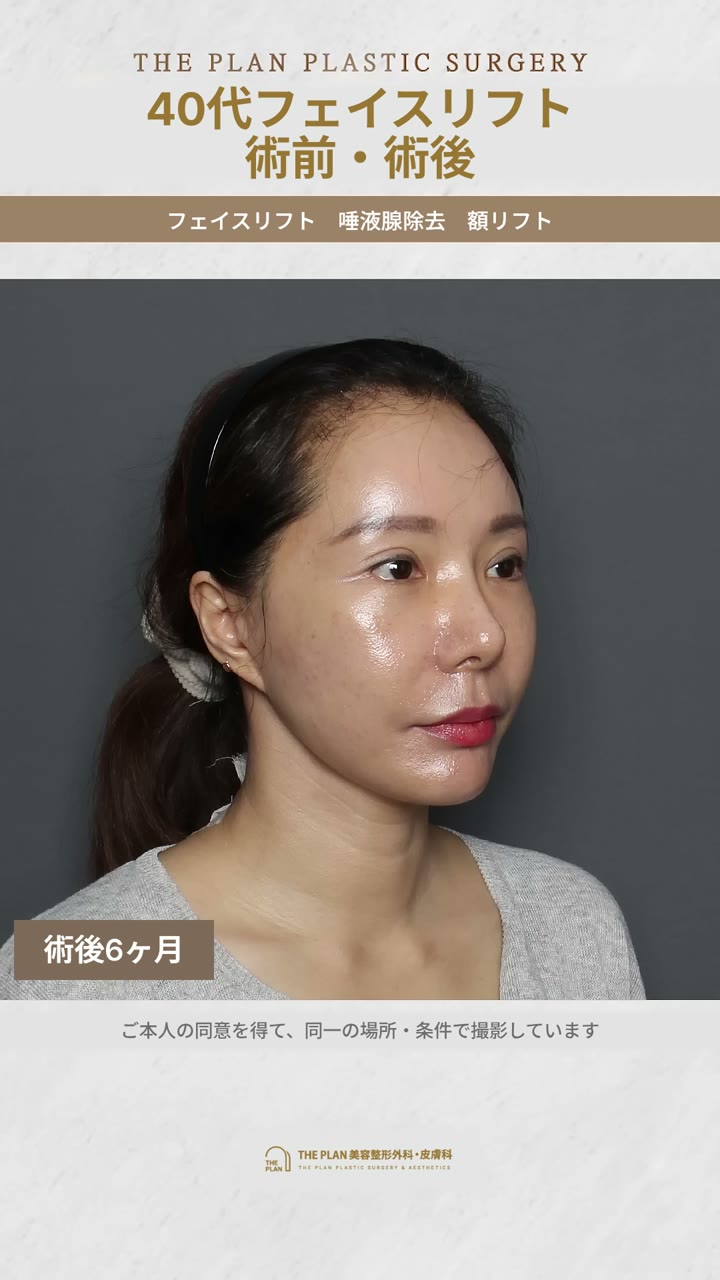
40sFacelift+Salivary gland resection+Forehead Lift
Before surgery and at 2 and 6 months after surgery
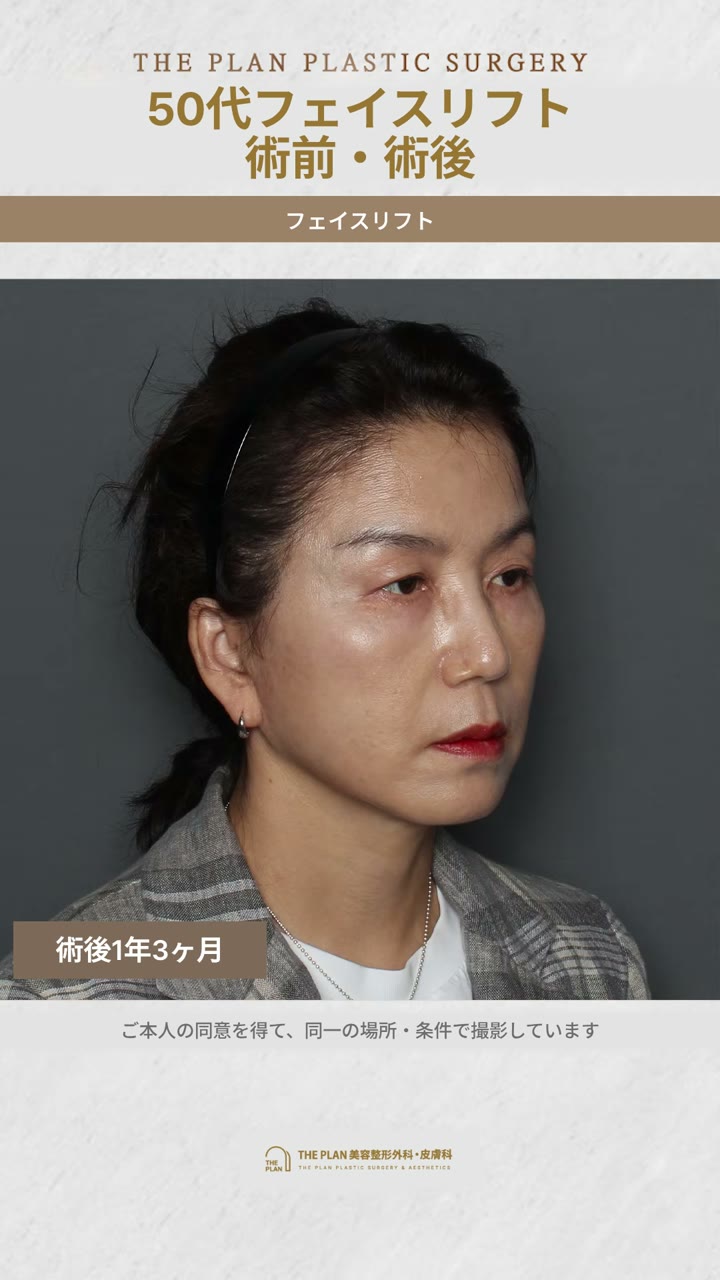
50sFacelift
Before surgery, then at 8 weeks, 4 months, and 1 year 3 months after surgery
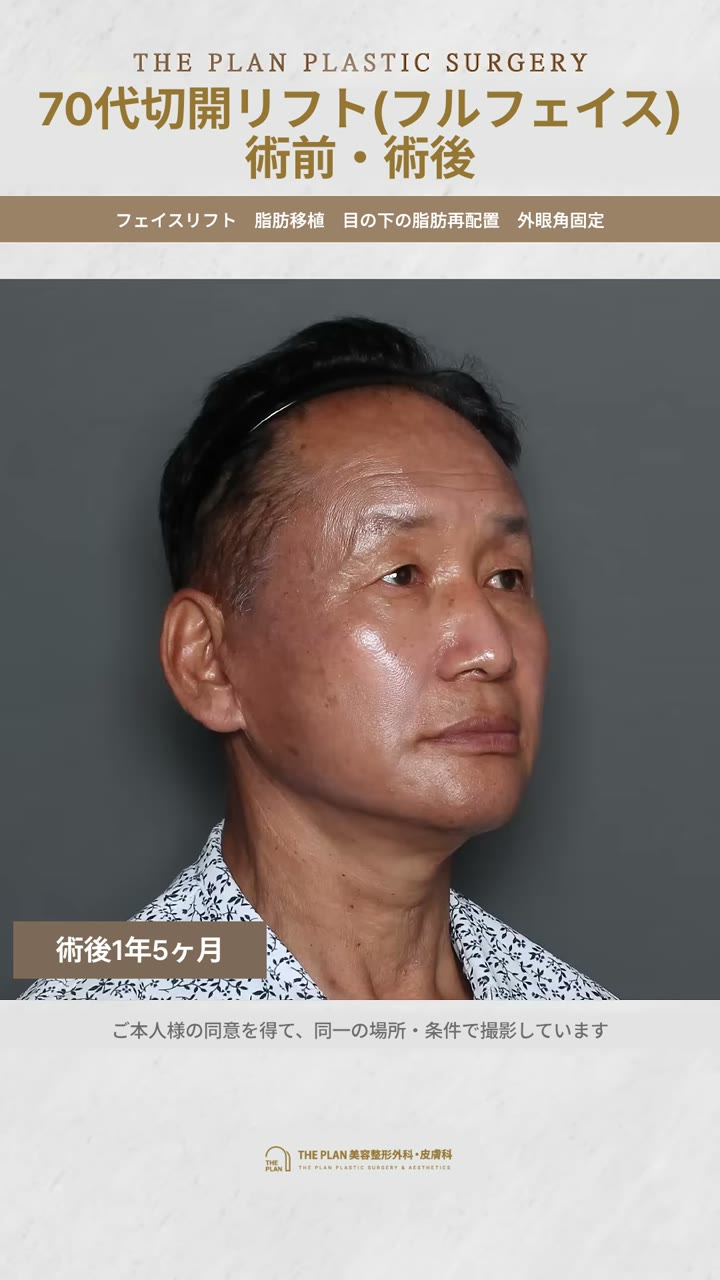
70sFacelift+Fat grafting+Lower eyelid fat repositioning+Fixation of the outer corner of the eye (lateral canthal fixation)
Before surgery, then at 1 month and 1 year 5 months after surgery
- Treatment Content
- The Medical Director performed a deep plane facelift. Some patients also had a forehead lift, salivary gland resection, fat grafting, or other procedures, as specified for each case.
- Treatment Duration and Sessions
- The surgery is performed once. Duration of facelift surgery Approximately 3 hours 30 minutes, Hospital Stay 1 day, Suture Removal 1 week, Recovery Period 7 to 10 days.
- Main Risks and Side Effects
- Possible risks include swelling, bruising, pain, scarring, asymmetry, temporary numbness, hematoma, and infection. Rarely, temporary facial nerve palsy can occur. All surgery carries risks, including bleeding. Discuss these risks before deciding whether to proceed. Recovery and results may vary from person to person.
Types of facelift





A surgeon with a particular interest in facelifts
I am Jun Hyung Park, Medical Director of THE PLAN. Facelift surgery has been the focus of my practice and research for more than 10 years.
I value listening to each patient's story.
THE PLAN focuses on treating age-related changes. Our general policy is to schedule one surgical facelift per day, except when circumstances require otherwise.


What is the deep plane technique?
The deep plane is the tissue plane between the SMAS, the fascial layer beneath the skin, and the muscles of facial expression. The technique focuses on repositioning fascia and fat rather than pulling on the skin.
In Dr. Jun Hyung Park's deep plane technique, the retaining ligaments in this plane are released so the SMAS can be lifted with very little tension.
The skin remains attached to the underlying tissue while the descended muscle, fat, and SMAS are repositioned together. Only a limited amount of skin is removed.
See which areas a deep plane facelift treats and where the incisions are madeWhat happens during facelift surgery at THE PLAN?
Deep plane facelift at a glance
These estimates from the clinic’s Korean website apply to a full-face facelift.
 Duration of facelift surgery Approximately 3 hours 30 minutes
 Anesthesia Sedation or general anesthesia
 Hospital Stay 1 day
 Suture Removal 1 week
 Recovery Period 7 to 10 days
Safety in the Operating Room
From anesthesia to surgery records, THE PLAN continues to provide care in the operating room.
- Anesthesia
One-to-one care from an anesthesiologist
An anesthesiology specialist provides one-on-one anesthesia, monitoring blood pressure, ECG, and respiration in real time using a bio-monitor.
Introduction to Anesthesiologists - Operating Room
AED and built-in oxygen supply
The operating room has an automated external defibrillator (AED) and a built-in oxygen supply.
- Operating Room
24/7 CCTV Monitoring
CCTV is installed in all operating rooms and operates 24 hours a day.
- Record
Video documentation of SMAS dissection and fixation
For each patient, we record the appearance of the SMAS after it has been dissected and secured.
Frequently Asked Questions
Find answers to common questions below. If you have another question, you can ask us using the online booking form.
What is a facelift surgery?
At THE PLAN, a deep plane facelift repositions the SMAS (a fascial layer) and fat. The surgeon releases the retaining ligaments in this plane so the descended tissues can be moved together with less pull on the skin.
Who will perform the surgery?
Medical Director Jun Hyung Park, a specialist in plastic surgery with a PhD in Medicine, performs the surgery. He has personally performed facelifts for over 10 years.
How many surgeries will be performed in one day?
Our policy is generally to schedule one facelift per day, except when circumstances require otherwise.
How is a mini facelift different?
A mini facelift targets either the midface or the lower face. The clinic considers it for people with less sagging than would require a full facelift, those with loose skin after facial bone contouring, double-jaw surgery, or liposuction, and those seeking to limit recovery time and scarring.
How long should I plan to stay if I am traveling from abroad?
For a full-face deep plane facelift, the usual estimates are one day in hospital, stitch removal after one week, and 7–10 days for recovery. Ask at your consultation how long you personally should stay.