For patients who travel to Korea for an incisional facelift, the first practical question is often not the final contour but when it is reasonable to board a plane home. Cabin pressure, prolonged sitting, dry air, and the early postoperative risks of bleeding and swelling are not an extension of sightseeing. Clearance to fly is not a number on a calendar. It is an individual assessment of how wide the dissection was, whether hemostasis is stable, whether drains are still in place, when sutures come out, and what other procedures were combined.
Clinical axis
Early hematoma risk has receded, the wound is closed, drains and sutures have been addressed, and there has been enough observation time should the airway or the wound change suddenly.
Itinerary axis
Build one sequence from the day of surgery: first check, suture removal, in-flight posture and hydration, and a plan for care after you land.
Limits
“How many days until I can fly” is only a starting phrase. Marked swelling, unstable blood pressure, combined bone work, or higher clot risk can make delay the sound decision.
Why a flight date cannot be set by day count alone
The cabin is a lower-pressure, lower-humidity environment than the ground. Facial soft tissue after a lift readily holds interstitial fluid; a drop in pressure can be felt as a temporary increase in puffiness. An incisional facelift involves pre- and post-auricular wounds, SMAS and ligament work, and sometimes the neck. A sealed skin edge and stable hemostasis in the deeper plane are not the same thing.
The event of greatest concern in the first days is hematoma. Sudden swelling, tightness on one side, a sharp rise in pain, or a change in breathing or swallowing is difficult to manage in an airport or at cruising altitude. Long sitting also slows blood flow in the legs. Surgery, anesthesia, and immobility together are the familiar setting in which venous thrombosis is discussed. A return ticket should therefore be designed as a flight after observation and wound care have reached a plateau, not as the first seat that was available.
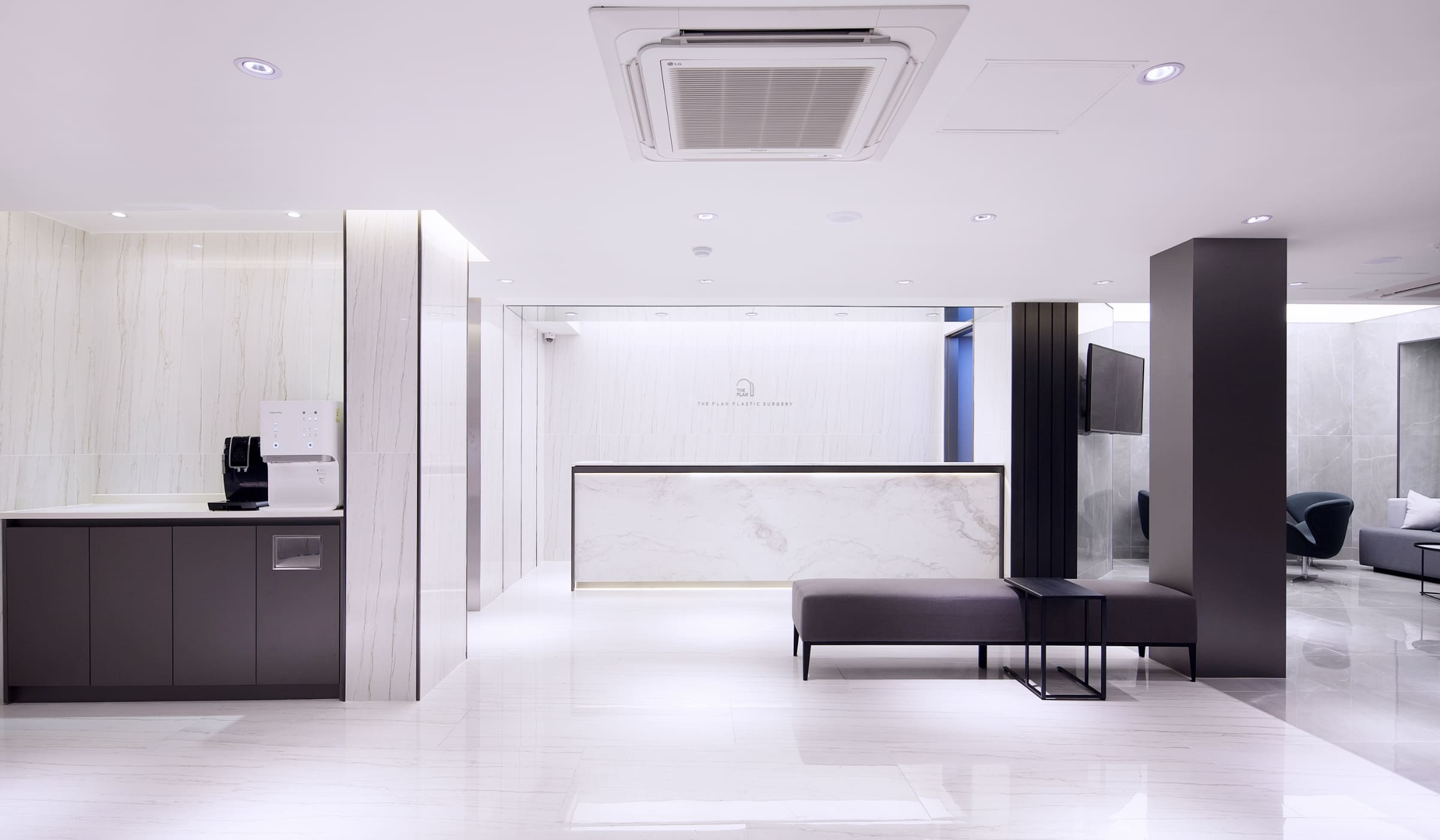
At THE PLAN Plastic Surgery & Dermatology in Gangnam, Seoul, representative director Park Jun Hyung, MD PhD, performs only one incisional facelift a day. The same principle of individuality applies to travel clearance. Full facelift, mini lift, forehead lift, neck lift, and combinations with contouring or fat grafting shift the peak of swelling and the suture-removal calendar. Do not copy another patient’s itinerary onto your own ticket.
Medical checkpoints before you board
Fitness to fly is less about how the face looks in a mirror and more about whether the following are stable. These are items for an in-person exam, not a self-checklist that replaces one.
- Wound closure and drainage: ongoing bleeding, soaked dressings, or abrupt one-sided swelling.
- Drains and compression: while a drain is in, or immediately after removal if output is still high, long-haul travel is postponed.
- Sutures and taping: before peri-auricular sutures are out, friction from masks, pillows, and the seat headrest loads the incision.
- Pain and medicines: analgesics, antihypertensives, stomach upset, and sleep loss can all move blood pressure.
- Clot and breathing: calf pain or warmth, shortness of breath, or chest pain requires evaluation before any boarding discussion.
- Airway and neck: after a neck lift or wide dissection, tightness with swallowing is not a minor complaint.
The indication for travel is a systemic state in which going home is medically plausible. The limitation is the period when the surface looks tidy but the deeper field is not yet quiet, plus the simple fact that a cabin is not a treatment room. High blood pressure, a history of antithrombotic drugs, smoking, a long haul, and multiple connections all make the same postoperative day a more cautious decision.
How recovery stages map onto a return plan
Recovery varies. The table is a map for conversation, not a diagnosis and not permission to fly. Final clearance belongs to the operating surgeon after examination.
| Approximate window | What often happens clinically | What travel planning should respect |
|---|---|---|
| Day of surgery through 72 hours | Relative hematoma risk is highest. Swelling and pain are marked; drain care is the focus. | Long-distance travel is not the plan. Lodging should be within reach of the clinic. |
| Postoperative days 4–7 | Some people pass the peak of swelling, while bruising continues to change color and the wound is still settling. | Even a short hop is reconsidered if sutures remain and drainage persists. Move the legs during any sitting. |
| Around suture removal (often week 1–2) | Peri-auricular sutures come out; tapes are replaced; the scar is in its earliest remodeling. | Flying the same day as suture removal stacks friction and fatigue. Keep quiet time after the visit. |
| After two weeks | The surface wound is often quieter. Deep firmness, asymmetry, and numbness may remain. | On a long flight, discuss compression stockings if appropriate, walk at intervals, hydrate, and avoid extra alcohol or unprescribed sedation. |
| Around one month | Daily life is easier; the result is not finished. Scar maturation and sensory recovery continue. | Do not judge the outcome from arrival-hall photographs. New tightness or heat is a reason to follow postoperative contact instructions, not to wait. |
A mini lift with little neck work and a full facelift combined with neck lift, salivary-gland reduction, fat grafting, or osteotomy do not share the same “week one.” Bone work can leave a subjective response to pressure change and temporary limits on chewing. State every combination before you lock a ticket.
How to build the return schedule
Wanting a firm flight before surgery is understandable. A changeable itinerary is the safer medical default. Clinic hours in Gangnam are 10:00–19:00 on weekdays, 10:00–16:00 on Saturday, and closed on Sundays and public holidays. To place suture removal and unplanned review on a working day, leave a spare weekday between surgery and departure.
- Fix the operative map first: facelift alone, or forehead, neck, fat grafting, or facial bone work as well.
- Count backward from the first check and suture-removal weekday. A Sunday or holiday in the middle creates a gap in observation.
- Do not fly on suture-removal day. A morning visit and an afternoon departure stack tape changes and blood-pressure swings.
- Prefer a nonstop flight. Connections add walking, waiting, baggage handling, and more sitting.
- Choose an aisle seat when you can. Flex the legs, drink water, and do not combine alcohol with sleep medication unless the surgeon has agreed.
- Identify a clinician or emergency path in the city where you land. Sudden wound change is not a “wait and see” event.
If you use lodging support, the point is not a nicer hotel. It is a place where cooling, head elevation, medicines, and dressing changes can be done as instructed, close enough for review in the first 48–72 hours. Even with a family member present, someone must be able to notice one-sided swelling at night.
What can happen in the cabin, recovery, and adverse effects
Recovery is wound stability and the slow decline of swelling. In the cabin, several phenomena can overlap. None is guaranteed; all are worth knowing.
- A temporary rise in swelling: pressure, salt, and poor sleep can make the next morning look like an earlier postoperative day.
- Ear-area discomfort: because the incision sits in front of and behind the ear, pressure change may bring fullness or a pulling sensation. Forceful Valsalva (pinching the nose and blowing) loads the wound.
- Dryness: low humidity hardens crust at the wound edge and invites unconscious touching. Do not handle the incision with unwashed hands.
- Immobility and clot risk: avoid sitting with crossed legs for hours; ask before surgery whether graduated stockings are appropriate.
- Blood-pressure swings: pain, anxiety, caffeine, and cabin temperature are managed in practice because hypertension and uncontrolled pain sit on the pathway to hematoma.
Adverse events that change a travel plan include delayed hematoma, wound separation, infection, seroma, reduced skin perfusion, tight swelling on one side, breathing difficulty, and one-sided calf swelling. The issue is not a promised frequency; it is where you are if they occur. The same symptom in Seoul and at altitude offers different options. Fever, pus, sudden one-sided swelling, visual change, severe headache, chest pain, or shortness of breath means you do not board; you seek care.
What a clinic can responsibly offer is not a faster result. It is an observation window long enough that, if something is wrong, it can be assessed the same day. Judging the aesthetic endpoint takes months. The seat-back mirror on the flight home is not that moment.
When an in-person visit is required
A phone photograph can convey an impression of asymmetry. It cannot reliably convey firmness, pulsatile bleeding, skin color, or how much room the airway has. If any of the following apply, changing the ticket matters less than being examined.
- One side expands quickly, pain rises sharply, or the mouth or neck feels pushed from within.
- Drain output color or volume diverges from instructions, or the wound becomes wet again after removal.
- Systolic pressure stays high after medication, or lightheadedness and palpitations persist.
- One-sided calf pain, chest pain, or shortness of breath.
- Wound-edge separation, odor, fever, or a sudden change in vision.
The return date is not the cosmetic finish. It is a transfer that happens after hemostasis and wound stability have been confirmed while you are still on the ground, inside a medical system that can act. Fit the flight to the operation and the course, not the body to a cheap seat. For surgery abroad, the highest-yield change is almost never the fare. It is not trimming the observation days.
Individual variation is large. The same named procedure can mean different swelling peaks and different suture counts. This article organizes a way of thinking; it is not boarding clearance. At consultation, bring the planned procedure, combinations, flight length, connections, and any blood-pressure or antithrombotic medicines, and set a provisional return date together.
Frequently asked questions
Can you name a single postoperative day when flying is allowed?
No single day applies to everyone. The first days, when hematoma risk is relatively higher, drain care, and an unstable wound before suture removal are poor times for a long flight. For many incisional facelifts, the surgeon gives individual clearance after suture removal and early wound stability. A mini lift and a full lift with neck work do not share the same estimate.
May I book the return on the same day as suture removal?
That pairing is usually unwise. After sutures come out, tapes are reset, a little seepage can appear, and fatigue and blood pressure move together. When possible, fly on a later day, after a morning exam has shown no new problem. That reduces friction on the wound and the hours you would spend aloft without ready care.
Does a short regional flight differ from a long-haul international one?
Yes. Sitting time, access to care, and the duration of pressure change all differ. Even a nonstop from Seoul to Japan or China still means hours of sitting and dry air. Connections and overnight flights add load. A short hop is still deferred if the wound is unstable or breathing symptoms are present.
If swelling increases in the cabin, has the surgery failed?
A temporary increase can follow pressure change, salt, and poor sleep. That is not a verdict of failure. Sudden tightness on one side, a spike in pain, or trouble breathing or swallowing is different and may suggest hematoma or another acute problem. Do not watch that at home; stop the boarding plan if you are still on the ground, or seek care as soon as you land.
Why extend lodging if I am not sightseeing?
Early recovery is cooling, head elevation, blood-pressure control, dressing changes, and a short distance back to clinic if something changes. Staying near Gangnam keeps weekday and Saturday hours usable. Lodging support is operational, not a holiday add-on. Whether to extend is decided from the actual course, not from a brochure.